Hospitality

Hospitality, Latest News, Travel

SaltStayz Forays into the Leisure Segment with Launch of Autograph Property in Rishikesh

SaltStayz, a fast-growing hospitality brand has marked its entry into the leisure travel segment with the launch of its premium category ‘Autograph’ brand in Rishikesh – one of India’s most sought-after wellness and spiritual destinations. Presently, SaltStayz has its presence in key business travel markets including New Delhi, Gurgaon, Noida, Faridabad and Chandigarh-Mohali. SaltStayz Autograph Rishikesh has been positioned towards guests looking at a high-quality stay combined with experiences and a deeper connection with the destination. Strategically located in the heart of Rishikesh, the property enjoys proximity to key landmarks such as Triveni Ghat and Parmarth Niketan Ashram, providing access to key spiritual and cultural landmarks in the destination. The hotel’s location also allows for easy access to major touch-points including Ram Jhula & Lakshman Jhula while still offering a sense of calm and retreat. SaltStayz Autograph Rishikesh has also been positioned with a focus on wellness-led experiences. Given its proximity to key spiritual and leisure points in Rishikesh, the property provides access to activities such as yoga sessions, guided spiritual walks and self-exploratory bicycle tours to enable guests to discover the surrounding areas. Dedicated spaces for meditation have been incorporated as part of the overall design. The property also includes an all-day dining restaurant, featuring the first of its kind – pure vegetarian Moti Mahal restaurant. Gaurav Gupta, Co-Founder, SaltStayz said, “Rishikesh is witnessing a clear shift towards wellness-led travel with guests increasingly seeking more immersive and experience-driven stays. While SaltStayz has traditionally operated within the business travel segment, we have been observing consistent demand from our existing customer base for similar offerings in leisure destinations. The launch of our Autograph category in Rishikesh is a direct response to this shift, reflecting both evolving consumer preferences and our broader expansion strategy.” With 38 keys, the property launch in Rishikesh marks the implementation of SaltStayz’s broader strategy of expanding into high-potential leisure destinations while offering thoughtfully designed stays at competitive pricing. “In the post-pandemic period, demand for leisure and spiritual travel has increased significantly. Wellness has also emerged as a key factor influencing leisure travellers when choosing a destination,” added Gupta. Alongside its Autograph brand, SaltStayz’s portfolio also includes the Select and Premier categories. The hospitality company is planning to expand into other parts of the country through its Autograph portfolio. Designed for modern travellers seeking more than just accommodation, Autograph hotels are set to play a central role in SaltStayz’s expansion strategy in the near future.

Hospitality, Latest News, Personality

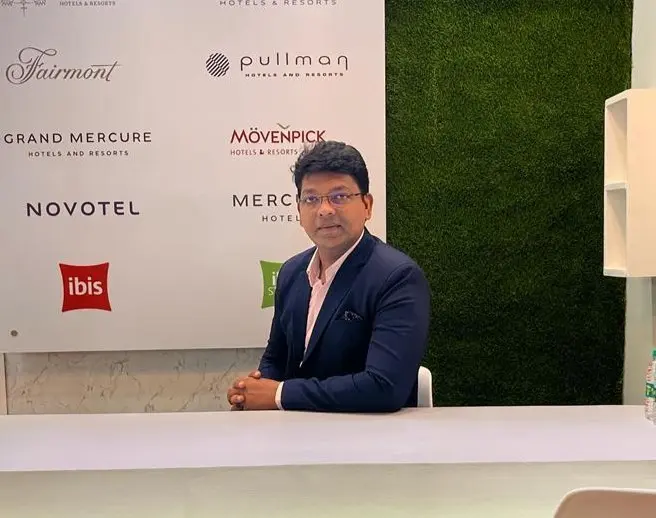
Amit Bagga Co-founder, CEO and CMO of Daryaganj Hospitality

Amit Bagga didn’t set out to merely run restaurants; he set out to tell a story that deserved to be remembered. As the Co-founder, CEO and CMO of Daryaganj Hospitality, he stands at the helm of Daryaganj–By the Inventors of Butter Chicken & Dal Makhani, a brand rooted in legacy yet driven by a contemporary, future-facing vision. For Amit, hospitality is not just about food on a plate—it is about preserving history, honouring craft, and building brands that people form lasting emotional bonds with. His journey in hospitality has been shaped by equal parts instinct and insight. Known for his sharp eye for detail and relentless pursuit of excellence, Amit has led Daryaganj through the highs and lows of a competitive, ever-evolving industry, emerging stronger each time. Since its inception in 2019, the brand has grown to 15 outlets and recently marked a significant milestone with its international debut in Bangkok, signalling the global appeal of a deeply Indian story. Backed by years of experience, he has been delivering memorable culinary experiences to patrons since his foray into the restaurant industry over a decade ago. Amit began as an outsider, with his family’s roots in the automobile business, yet has emerged as one of the most recognisable faces in India’s food and hospitality sector. Without a traditional hospitality background, he carried forward a strong customer-centric approach and entrepreneurial lessons from his family legacy, and firmly believes that integrity, business acumen, grit, and an unwavering pursuit of excellence can make any goal achievable. He constantly strives to innovate and improve, bringing a creative mindset and an astute eye for detail to everything he does, always pushing himself to set higher standards. Amit believes true success comes from competing with oneself and creating personal benchmarks. Always hungry to learn, he is even more driven to translate knowledge into action. He approaches both life and leadership with confidence, poise, and humility. Under his leadership, Daryaganj has earned 63 industry and consumer awards, a testament to its consistency, credibility, and cultural resonance. His individual accolades—including Restaurant Icon of the Year (The Economic Times), Entrepreneur of the Year (International Hospitality Council, London), and Restaurateur of the Year (Big F, FCIC & MSME India)—reflect a professional journey defined not by speed, but by substance. Beyond the brand, Amit plays an active role in shaping India’s food and beverage ecosystem as the Delhi Co-Chapter Head of the National Restaurant Association of India (NRAI). A respected industry voice and sought-after speaker, he is particularly passionate about the intersection of hospitality and technology, advocating the thoughtful use of AI and data analytics to elevate operations and deepen customer experience—without ever losing the soul of service. His appearance on Shark Tank India further spotlighted his entrepreneurial clarity and conviction, but those who know Amit say his true strength lies in his ability to build with purpose, lead with empathy, and dream with discipline. At his core, Amit is a storyteller—one who believes that when heritage is handled with care and innovation is led with heart, Indian hospitality can truly hold its own on the world stage.

Hospitality, Latest News

EkoStay Crosses ₹40 Crore in Revenue, Scales to 150+ Villas Across 12+ Cities, Built Entirely Without External Funding

India’s bootstrapped homestay hospitality brand delivers 43% YoY growth, remains EBITDA-positive, and targets 220+ properties with continued double-digit margins Mumbai,  April 23rd,2026: At a time when growth in hospitality startups is often equated with capital raised, EkoStay is charting a fundamentally different trajectory, one anchored in profitability, operational discipline, and consistent guest demand. The Mumbai-based alternative accommodation brand has reported ₹40 crore in revenue for FY 2025–26, marking a 43% year-on-year growth, while continuing to remain EBITDA-positive with ~10% margins. But beyond revenue, the scale of the business tells a deeper story. From its inception in 2018, EkoStay has grown into a network of 150+ professionally managed villas across 12+ leisure destinations, translating into hundreds of operational rooms and guest units serving travellers across India’s most in-demand holiday markets. The brand currently operates at an average occupancy of 56%, with a strong and growing base of repeat customers. Looking ahead, the company is targeting ₹52+ crore in revenue in FY27, alongside a 30%+ growth trajectory and plans to scale its footprint to 220+ properties nationwide. A Bootstrapped Model That Prioritised Fundamentals Over Funding Founded by Husain Khatumdi, Sohail Mirchandani, Varun Arora, and Zishan Khan, EkoStay has been built without raising external capital, relying instead on internal accruals, measured expansion, and sharp operational control. “Being bootstrapped meant every decision had to be efficient and accountable. That discipline is what continues to define how we scale today,” said Varun Arora, CEO & Co-Founder, EkoStay. This approach has enabled the company to grow sustainably, while maintaining profitability in a segment often characterised by high burn and fragmented supply. Repeat Behaviour, Not Discounts, Driving Growth A defining lever of EkoStay’s growth has been repeat bookings and organic referrals, significantly reducing dependence on paid acquisition channels. “Consistency in guest experience has been critical in building trust. A large part of our growth today comes from guests who choose to stay with us again or recommend us within their network,” added Sohail Mirchandani, COO & Co-Founder. This repeat-driven model has allowed the brand to strengthen unit economics while scaling demand in a capital-efficient manner. Scaling Supply Where Demand Already Exists EkoStay’s expansion strategy has remained sharply demand-led, focusing on high-traction leisure micro-markets rather than aggressive, undifferentiated inventory addition. The brand has seen particularly strong growth across South India, including the Nilgiris region, where demand for private villa stays continues to rise alongside evolving travel preferences. “Our focus has always been on identifying destinations where demand is structurally strong and aligning our supply accordingly,” said Zishan Khan, Chief Acquisition Officer & Co-Founder. A Standardised Yet Personalised Hospitality Model Operating at the intersection of hospitality and vacation rentals, EkoStay combines the reliability of branded hospitality with the privacy and comfort of homestays. Its model also enables homeowners to unlock value from their properties through professional management, without the operational complexities of hosting, creating a parallel supply pipeline that supports scalable growth. What ₹40 Crore Represents For EkoStay, this milestone is not just about topline growth. It reflects a business built with zero external funding, zero dilution, and no reliance on debt, driven entirely by customer demand and internal reinvestment. “₹40 crore is not just a revenue milestone, it validates a model that has been built sustainably, with long-term value creation at its core,” said Husain Khatumdi, Managing Director & Co-Founder. Positioned for the Next Phase of Category Growth India’s alternative accommodation segment is witnessing a structural shift, driven by rising domestic travel and increasing preference for private, curated, and experience-led stays. With a strong foundation of profitability, repeat demand, and a growing supply base, EkoStay is well-positioned to capitalise on this momentum. As the company scales towards 220+ properties and ₹52+ crore in revenue, its focus remains clear: disciplined growth, stronger operations, and delivering consistently high-quality guest experiences at scale.

Hospitality, Latest News

The Future of the Himalayas’ White Paper released on World Earth Day at New Delhi

On the occasion of World Earth Day, the CP Kukreja Foundation for Design Excellence (CPKF) has launched a White Paper titled ‘The Future of the Himalayas’ in New Delhi. The initiative underscores the critical importance of the Himalayan region, which directly impacts nearly one-fourth of the global population—around 2 billion people—who depend on it for water, food security, and ecological balance. The launch was graced by Chief Guest Shri Pema Khandu, Hon’ble Chief Minister of Arunachal Pradesh. The White Paper is the outcome of a multidisciplinary Himalayan Roundtable convened by the Foundation, bringing together experts across governance, infrastructure, ecology, governance, engineering, and social science to address the increasing complexity of development challenges in the region. At a time when climate volatility, rapid infrastructure expansion, and ecological fragility are converging, the publication underscores the urgent need to rethink prevailing development paradigms in the Himalayas. It highlights that the Indian Himalayan Region has witnessed a 15–20% rise in extreme rainfall events since the 1950s, accompanied by growing landslide risks and mounting stress on infrastructure systems. The report positions these, not as isolated occurrences, but as interconnected consequences of a deeper structural misalignment between development approaches and the realities of fragile mountain ecosystems. The White Paper calls for a fundamental shift in how development in the Himalayas is conceptualised and executed. Key recommendations include transitioning from project-led interventions to system-level planning, aligning development strategies with watershed and basin-scale ecological processes, integrating scientific data into governance frameworks, and adopting terrain-responsive, context-specific infrastructure design. It also underscores the importance of recognising ecological carrying capacity as a critical, non-negotiable parameter. Importantly, the report reframes the Himalayas not as isolated geographies but as interconnected systems that directly impact nearly 1.3 to 1.5 billion people downstream across South Asia. Introducing the White Paper, Dikshu C. Kukreja, Director, CP Kukreja Foundation for Design Excellence, said, “Launching the White Paper ‘The Future of the Himalayas’ on World Earth Day, the CP Kukreja Foundation for Design Excellence underscores the urgent need to rethink our approach to this critical ecosystem that supports nearly 2 billion people. While development across roads, hydropower, and tourism is essential, the irreversible damage being caused calls for a shift from fragmented decision-making to a more holistic, science-led policy framework. The White Paper advocates moving beyond siloed thinking towards long-term, sustainable design and resilience. Climate change is a consequence of human overreach, and unless we act responsibly, its impacts will only intensify. Protecting the Himalayas is not just an environmental priority—it is central to securing our collective future.”   Speaking at the launch, Shri Pema Khandu, Hon’ble Chief Minister of Arunachal Pradesh emphasised the need for a balanced approach to development in mountain states, highlighting that ecological preservation and economic progress must go hand in hand to ensure long-term sustainability. He expressed, “The Himalayas are at a critical juncture today, where the need for development must be carefully balanced with ecological sensitivity. While local communities seek growth and opportunity, it is essential that we adopt a calibrated, middle-path approach that safeguards this fragile ecosystem. The White Paper, ‘The Future of the Himalayas: Rethinking Development and Resilience,’ launched by the CP Kukreja Foundation for Design Excellence, is a timely step in this direction. Much like complex challenges require a coordinated, multi-pronged strategy, development in the Himalayan region must be approached through an integrated framework—combining scientific assessment, responsible planning, sustainable infrastructure, community participation, and strong policy alignment. It is important that institutions like NITI Aayog, along with policymakers, developers, and global stakeholders, work together in a mission-mode approach to embed long-term resilience and contextual understanding into every development decision.” Positioned as a strategic framework rather than a prescriptive document, the White Paper identifies key structural gaps that continue to challenge Himalayan development. These include fragmented governance systems, underutilisation of scientific data, misalignment between engineering practices and terrain realities, and increasing pressures from tourism and rapid urbanisation. A panel discussion on the sidelines of white paper release “Resilient and Sustainable Futures for the Himalayan Region”, featured an eminent line-up of experts, including: Anil Wadhwa, who has served as India’s Ambassador to Italy, Poland, Oman, and Thailand, bringing deep diplomatic and geopolitical insights into regional development Pradeep Sangwan, Environmentalist and Mountaineer, Founder of Healing Himalayas Foundation, known for his grassroots work in ecological restoration and waste management in the Himalayas Nar Bahadur Khatiwora, Regional Programme Head (Asia), International Solar Alliance, Renewable Energy Specialist and Programme Leader, with extensive experience in sustainable energy transitions across developing regions Virendra Kumar Paul, Director, School of Planning and Architecture, New Delhi, a leading voice in urban planning, policy, and sustainable built environments Siksha Swaroopa Kar, Senior Principal Scientist at CSIR–Central Road Research Institute and Associate Professor at the Academy of Scientific and Innovative Research, specialising in infrastructure resilience and transportation systems Mili Majumdar, Senior Vice President, Innovation and Research, U.S. Green Building Council, and Managing Director, Green Business Certification Institute, a key advocate for sustainable building practices and green certifications in India CP Kukreja Foundation emphasised that addressing these challenges will require coordinated, cross-sectoral efforts anchored in data-driven governance, community-informed planning, and a long-term resilience lens rather than short-term gains. The document concludes with a call for a new Himalayan development framework—one that is grounded in ecological limits, responsive to cultural contexts, and supported by institutional coherence.

Hospitality, Hotels, Latest News, Resorts

Appointment Announcement: Conrad Bengaluru appoints Dhruva Parate as Director of Sales

Conrad Bengaluru is pleased to announce the appointment of Dhruva Parate as Director of Sales, further strengthening its commercial leadership and commitment to driving strategic growth. With over a decade of diverse experience across premium consumer brands and luxury hospitality, Dhruva brings strong expertise in corporate sales, market expansion, and strategic partnerships. An alumnus of the Institute of Hotel Management, Pusa, he has spent the last seven years with Marriott International, where he held key roles managing national accounts and driving revenue growth across multiple properties. He has also been associated with The Leela Palaces, Hotels and Resorts & Hyatt Hotels in the past. At Conrad Bengaluru, he will lead the hotel’s commercial strategy, focusing on strengthening client relationships, expanding market presence, and delivering performance-led growth. Commenting on the new role, Dhruva Parate said, “I am excited to join Conrad Bengaluru at such a dynamic phase of its growth. The hotel has built a strong reputation in the market, and I look forward to contributing to its continued success by strengthening partnerships and driving innovative sales strategies.” With this appointment, Conrad Bengaluru continues to build a strong leadership team aligned with its vision of delivering world-class hospitality and exceptional guest experiences.

Hospitality, Hotels, Latest News, Resorts

Country Inn Hotels & Resorts accelerates expansion in Uttarakhand with three new openings across Dehradun and Rishikesh

Country Inn Hotels & Resorts, the flagship brand of ‘Espire Hospitality Limited’, one of India’s fastest-growing hospitality companies, has announced the opening of three new hotels in Uttarakhand – ‘Country Inn, Dehradun’, ‘Country Inn, Rishikesh’ and ‘Country Inn Smart Stays, Rishikesh’, marking a significant step in their expansion journey and launch of a new brand ‘Country Inn Smart Stays’ that offers a fresh, youthful take on modern travel. With these additions, the brand has strengthened its footprint across key destinations in Uttarakhand, with an existing presence in Mussoorie, Bhimtal, and Jim Corbett, reinforcing its expansion across both urban centres and leisure destinations. The opening of 53-key Country Inn, Dehradun, introduces a contemporary stay in the capital city of Uttarakhand. Strategically located on Saharanpur Road, along the corridor of the newly operational Delhi–Dehradun Expressway, the hotel has an advantage of the reduced travel time of just 2.5 hours now. Designed for both business and leisure travellers, as well as those heading further into the hills, the hotel offers a well-connected base with the most spacious rooms in the city, a multi-cuisine restaurant, Sutra, and expansive banqueting facilities. The hotel features large-format event venues including the Crystal Ballroom and Aura Hall, making it a strong destination for weddings, conferences, and social gatherings. In Rishikesh, the brand has introduced two distinct formats catering to different travellers. Country Inn, Rishikesh, located in Tapovan, offers contemporary accommodation in close proximity to key spiritual landmarks such as Lakshman Jhula and Parmarth Niketan Ashram. With 28 rooms including the Suites offering Ganga views, a casual dining restaurant, and an intimate event space overlooking the Ganges, the hotel is designed for travellers seeking a comfortable and well-connected stay in the city.  Further strengthening its presence in the destination, the group has also introduced Country Inn Smart Stays, Rishikesh, marking the launch of a new brand format under the Country Inn portfolio. Designed for younger, experience-led travellers, Country Inn Smart Stays focuses on smart spaces, warm hospitality, and ease of use. Located at a walking distance from Lakshman Jhula, the hotel offers 31 well designed rooms, rooftop swimming pool and dining, BOHO Café and a lively recreation zone. Speaking about the expansion, Mr. Akhil Arora, Chief Executive Officer and Managing Director of Espire Hospitality Group, said, “Uttarakhand continues to be a strong focus market for us, given its growing appeal across leisure, spiritual, and experiential travel. With the opening of three new Country Inn properties and one more coming very soon across Dehradun and Rishikesh, we are strengthening our presence across the state while catering to a diverse mix of travellers. From urban stays in Dehradun to multiple formats in Rishikesh, this expansion reflects our intent to be present across key destinations with offerings for diverse travellers” These additions will play an integral role in our overall growth strategy. With over 30 signed hotels and a plan to add at least 1,000 keys every year, we are on track to achieve the milestone of 45 hotels by the end of FY27.”

Hospitality, Hotels, Latest News

Conrad Bengaluru appoints Aagman Baury as Hotel Manager

Conrad Bengaluru is pleased to announce the appointment of Aagman Baury as its new Hotel Manager. With extensive experience across luxury and upscale hospitality, Aagman brings a strong track record of operational excellence, strategic leadership, and guest-centric innovation. A seasoned hospitality professional, Aagman has held leadership roles with renowned brands including The Leela Palaces Hotels and Resorts, Hyatt Hotels Corporation, InterContinental Hotels Group, and Marriott International. Over the course of his career, he has successfully led full-service and luxury hotels, managed pre-opening projects and operational turnarounds, and consistently delivered strong financial performance while enhancing guest satisfaction. Prior to joining Conrad Bengaluru, Aagman served as General Manager at The Leela Ambience Convention Hotel, Delhi, where he played a key role in driving operational efficiency and strengthening the property’s market positioning. His earlier stints include leadership roles at Park Hyatt Hyderabad, Trident BKC, and JW Marriott Marquis Doha, where he built deep expertise across hotel operations and rooms division management. In his new role, Aagman will oversee overall hotel operations, focusing on delivering exceptional guest experiences, strengthening operational efficiencies, and driving sustainable growth. He brings a collaborative and data-driven approach to leadership, with a strong emphasis on building high-performing teams, fostering a culture of accountability, and aligning business strategies with long-term asset value. Commenting on his appointment, Aagman Baury said, “I am delighted to join Conrad Bengaluru and look forward to working with a talented team to further elevate the hotel’s positioning as a leading luxury destination. My focus will be on delivering consistent excellence, enhancing guest experiences, and driving growth through innovation and strong team collaboration.” With this appointment, Conrad Bengaluru continues to strengthen its leadership team, reinforcing its commitment to delivering world-class hospitality and exceptional service.

Hospitality, Latest News

SEETI 2.0 Puts Meghalaya on the Global Culinary Map Through Deep Cultural Immersion

SEETI 2.0, a five-day culinary immersion, brought together around 50 chefs, creators and storytellers for an experience that moved far beyond conventional food tourism. Designed as a deeply curated cultural platform, the programme enabled participants to experience Meghalaya through its communities, landscapes and living traditions. Unlike traditional festivals, the initiative prioritised meaningful engagement over surface-level exposure. Built on the idea of generosity and exchange, it created a space where the food and beverage community could come together not just to experience, but to contribute, collaborate and carry stories forward. The result was not a moment, but a growing body of ideas, relationships and narrative capital that extends well beyond the event. “This year’s Meghalaya experience was about doing things differently. We wanted to understand what we could bring to the North East, and equally what we could take from here to the rest of the country and the world. The focus was not just on showcasing food, but on creating platforms for local chefs and communities to participate, engage and lead the narrative,” said Priya Raje, Co-Founder of the SEETI Movement. The programme was preceded by nearly a year of on-ground research, mapping Meghalaya’s diverse food systems, communities and landscapes. This translated into a series of highly contextual experiences — from meals following visits to sacred forests to immersive sessions at tea estates overlooking Umiam Lake each designed to reflect the cultural and ecological depth of the region. The structure of the experience was rooted in the identities of the Khasi, Jaintia and Garo communities. “Designed as a cultural platform rather than a conventional event, the focus was on creating real connections between people and place. When experiences are truly rooted, they shift from being observed to being felt. That sense of participation is what stays with you and what ultimately drives long-term impact,” said Sid Mewara, Co-Founder of the SEETI Movement. He added, “Many guests arrived with a limited understanding of the region’s food. What they discovered was a remarkable depth — from nuanced vegetarian traditions to layered, subtle flavours all set against some of the most striking natural environments in the country.” The programme also highlighted the inherent sustainability of local food systems from hyper-local sourcing and low-waste practices to deeply community-driven models of production and consumption. At the same time, it reinforced the importance of responsible tourism, encouraging engagement with heritage spaces such as sacred forests and community ecosystems with sensitivity and respect. While the on-ground experience was intentionally intimate, its impact has been designed to scale through its participants a curated mix of globally recognised chefs, hospitality leaders, investors, media and content creators. As storytellers, they extend the narrative into wider audiences, shaping how the region is seen, understood and experienced. The Meghalaya edition also intersected with the state’s Culinary Cascades initiative, enabling deeper engagement with local producers, chefs and stakeholders, along with conversations around the future of the region’s food, craft and cultural economy. Organisers acknowledged the role of the Meghalaya Government in enabling the initiative, noting that coordinated support across departments made it possible to execute a programme of this depth and scale. Such collaboration allows for the creation of platforms that extend far beyond individual events and begin to influence broader ecosystems. Following the success of the Meghalaya edition, the platform is now positioned to expand across the North East, the rest of India and international locations carrying forward a format that combines food, community and storytelling into a deeply immersive experience. A long-format film documenting the journey is also in development, further extending its reach.

Hospitality, Latest News

Changing Aspirations of Premium Homebuyers in NCR

For years, NCR’s housing narrative was anchored where value was measured in price points and access. Today, that paradigm is being rewritten. Homeownership is becoming an expression of aspiration, identity, and long-term lifestyle alignment. What was once considered “premium” has begun to move into the mainstream consciousness, not as an upgrade, but as an expectation. This shift is underscored by the fact that a significant share of recent housing demand in NCR is now concentrated in the Rs. 1 crore-plus segment, signalling that the market is evolving. Knight Frank India’s latest report has noted a notable change in the market where houses with a price tag of above Rs 10 million accounted for 50% of the total residential sales in the top eight cities of India in 2025. Out of a total of 348,247 units sold during the year, about 175,091 units belonged to the category of houses with a price tag of above Rs 10 million, which is an increase of 14% over the previous year, with sales volumes staying flat and high. Besides, the definition of “premium” in NCR’s housing market is seeing a shift. It is no longer defined by a price bracket or a ticket price level; instead, it is being redefined in terms of experiences, design, and identity. Today’s premium home is just as much about experiences and living as it is about price. This is also reflected in the supply side, where an increasing proportion of supply is aligned to this new premium, and in the buyer profile, where there is an expansion of this market across a broader spectrum of price points. Premium, therefore, is no longer an economic definition but a conceptual one, based on how people want to live, and not merely on what they can afford. Another aspect of equal importance is the emergence of a new form of a premium homebuyer, whose characteristics have moved beyond just a high net-worth individual. A staggering 63% of homebuyers today classify real estate as a preferred investment option, which reflects a more financially savvy approach to homebuying. This trend is now being fueled by dual-income households, along with a new set of wealth creators from startup economies and GCC-led employment growth. What is particularly telling is the widening participation across ticket sizes, from the Rs. 1–3 crore bracket to higher-value segments, indicating that premium housing is no longer the preserve of legacy capital. Instead, it is being shaped by an aspirational, upwardly mobile buyer class whose purchasing power is matched by a clear intent to upgrade both lifestyle and asset quality. Further, the demand is increasingly concentrated in new premium locations like Dwarka Expressway and Noida Expressway, which are driving nearly 75–80% of the high-value transactions, reflecting the trend towards planned and low-density living. Developments such as MRG Crown, fronting Dwarka Expressway in Sector 106, Gurugram, exemplify this shift, where projects are being positioned around curated living environments, improved connectivity, and access to emerging urban infrastructure.   “As homebuyers become more discerning, the focus is clearly shifting towards integrated living environments where connectivity, planning, and lifestyle come together seamlessly. Infrastructure-led corridors like Dwarka Expressway are driving this transformation and redefining what premium living means in NCR,” said Rajjath Goel, Managing Director, MRG Group. At the same time, even as the overall volumes are moderating, the trend in value growth is still dominated by larger configurations, reflecting a decisive shift towards more expansive and functional living spaces. It is not just about living in bigger homes; it is about investing in more efficient living. The fact is, people are not paying for space; they are paying for how well that space is optimized. There is a parallel change in the manner in which houses are perceived as living spaces. This is also evident in the supply side, where premium houses now make up almost 74% of new launches in the NCR region, similar to the demand side, which is actively seeking more than just space. This is also evident in the prices, where there is an increase of almost 14% in residential prices, mainly due to the sustained performance in premium houses. There is also a trend towards homes that are providing a cohesive living experience. The rise of gated communities is also a reflection of this trend, and it is clear that for the new-age premium buyer, the product is not just the apartment. Moreover, another significant change in definition relates to the way in which location is being judged and measured, as buyers are now focusing more on micro-market intelligence as compared to city-level intelligence. The fact that premium homes in NCR are now clearly seen to be appreciating in clusters along infrastructure-led corridors, where connectivity and growth potential are at their highest, underlines the fact that the NCR market as a whole has seen a significant appreciation in property values to the tune of almost 24% on a yearly basis. Corridors such as Dwarka Expressway and Southern Peripheral Road are now seen as primary options as compared to peripheral options, and this can be attributed to the fact that there has been sustained government investment in road infrastructure, as well as in the expansion of the Metro and reduction in travel times. The fact remains that the premium homebuyer of today is no longer constrained by traditional CBDs but is making decisions based on where the city is going, as opposed to where it has been. The evolution of buyer aspirations is also being mirrored in developer strategies in NCR, although not as a catalyst but rather as a response to the changing aspirations of the buyer. This is also being reflected in a gradual move towards fewer, better-curated launches, where quality is being given greater importance over quantity. Hence, supply is not being pushed into the market but rather being curated in response to a more evolved buyer, thereby reflecting a greater degree of coherence between what is being supplied and what is being demanded. It is, therefore, in

Latest News, Hospitality

Experion SAATORI Crosses Rs. 1,800 Crore Sales as Luxury Housing Demand Accelerates in Noida

Experion Developers, a leading luxury real estate group, has announced that it has clocked Rs. 1,800 crore in sales at the launch of its luxury residential development located in Sector 151 on the Noida-Greater Noida Expressway. Experion SAATORI – Redefining luxury living in Sector 151, Noida, with a Japanese-inspired lifestyle and premium residences  The company has sold approx. 400 units in Experion SAATORI which is situated 3 km from the Sector 148 metro station and is a short drive away from Noida International Airport at Jewar. The project benefits from excellent connectivity to major employment hubs across Noida and Delhi-NCR and is situated in a high-growth corridor. “Sector 151, Noida, is rapidly emerging as one of NCR’s most compelling residential micro-markets, driven by transformative infrastructure, seamless connectivity, and a fast-evolving urban ecosystem. SAATORI, our second project in Noida following the success of Experion Elements, has witnessed an exceptional response, with Rs. 1,800 crore in sales at launch. This performance is a strong validation of the deepening demand for luxury housing in Noida, particularly for developments that bring together design excellence, wellness-focused living, and a differentiated lifestyle proposition. With its strategic location near key infrastructure corridors, including Jewar Airport, and a rapidly maturing social and corporate ecosystem, we see sustained momentum in both end-user demand and investment interest in this market,” said Priyamvada Navet, Dy CEO, Experion Developers. Spread across an exclusive 5-acre, two-side open corner land parcel, SAATORI comprises three standalone towers rising to G+38 floors. The project is conceived as a low-density, Japanese-inspired lifestyle sanctuary, offering a tranquil residential environment with expansive green spaces and curated wellness amenities. With only four residences per core, it ensures privacy, openness, and unobstructed views. SAATORI has been designed by leading international consultants, with DPA, Singapore, serving as the architectural consultant and Plandscape, Bangkok, as the landscape design consultant, bringing global expertise and refined sensibilities to the project. The project offers spacious 3 BHK, and 4 BHK residences giving buyers the flexibility to make this luxury their own.

Vibrant Colours is an Indian registered publication catering to the travel, tourism, embassy and hospitality sector. The magazine is published under the global publication group  Prime Communication from New Delhi, India. Launched in 2019, the magazine was conceived with a vision to serve and celebrate the ever-growing travel trade and tourism industry across India and beyond.

Copyright © 2019-2026 Vibrant Colours. All rights reserved.

Scroll to Top